News
 03/25/2026
“Iranian Butter” and the Disease of Our Market
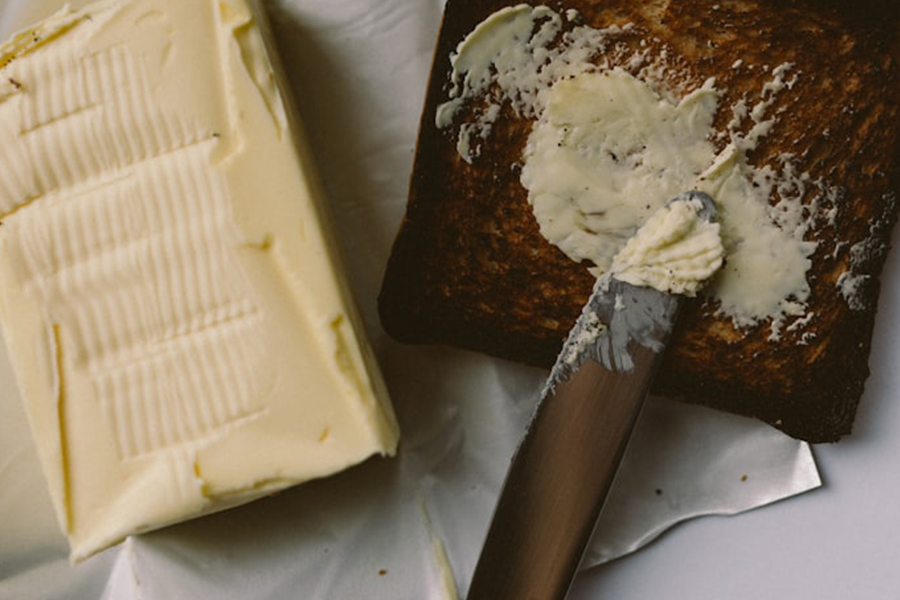
During the holidays, I went home to Khiva with the thought of bringing back a piece of my childhood. After all, my father often brought home that very legendary "Iranian butter" from the store. A taste that cannot be confused with anything else, the smell of a real product, untainted by compromise. I wanted my children to try what real butter is like. But this story is not about butter at all.
Why is there 5 times less butter?
Once, butter was sold in bowls; it was real and generous. Now, I look at the tiny portions in surprise and ask the seller: "Why so little?" The answer is painfully honest: "Feed has become more expensive. If we raise the price, no one will buy it. So we reduce the volume."
This is how, unnoticed, degradation begins—not just of the butter, but of the entire market.
The main business mistake: a battle for price, not quality
Today, entrepreneurs are afraid of being more expensive than their competitors. To stay afloat, they make sacrifices:
- use cheap raw materials
- reduce product quality
- hire inexperienced workers "for the experience"
- save on everything except the price
The logic is simple: the main thing is not to be more expensive than your neighbor. But the first thing a customer notices is not the cost, but the taste, quality, and real value of the goods.
Why the market is losing to itself
As a result, a paradoxical situation arises: local goods are cheaper, but people prefer imports. "Korean cosmetics are better," "German quality is more reliable"—these stereotypes are firmly stuck in people's heads.
Why? Because our producers have simply stopped competing on quality and are fighting exclusively on price.
Dumping is not a strategy, but a silent poison
A new player in the market lowers the price, takes customers, but what's next? The margin melts, volume doesn't save the day, and there is no money for development. The business dies, giving way to the next one, doing the same dumping.
Margin falls
Volume doesn't save
No money for development
Business collapses
Quickly entered—quickly disappeared. And there is a whole series of such examples in every city.
Yes, the market is regulated... but at what cost?
Adam Smith spoke long ago about the "invisible hand of the market." Yes, in the short term, the consumer wins. But in the long term? Trust and quality fall, strong players disappear, and only a cheap and weak product remains. In the end, everyone loses.
Internal business degradation
A company chasing the minimum price cannot pay a decent salary, loses specialists, lowers standards, and worsens the product. A chain reaction of destruction is launched, like dominoes.
An important point: high price is not a guarantee of quality
On the wave of the other extreme, some believe: "Set a high price tag—sales will skyrocket." This is a myth. If the product does not correspond to the price, first come the sales, then disappointment, a fall in trust, and a stop in repeat purchases.
Pricing is an art
The ideal price is a delicate balance. You need to clearly understand why your product costs exactly that much, how it differs, and what value it provides to the customer.
Price is not just cost
It is a mistake to think that the price is just the cost of production plus a markup. Marketing, sales expenses, training, market research, quality control, and most importantly—a reserve for development—are built into the price. Without this, a business will not be able to scale, adapt, or survive in a crisis.
And a bit about accounting (important)
All this is not just philosophy. National and international accounting standards have long spoken about the need to account for development, risks, and quality. But the accountant is often turned into a reporting operator rather than a strategic expert. And that's a pity!
Main conclusion
If you only focus on the competitor's price and lower yours, you might win today, but tomorrow you will lose. There will be no resource for maneuver, growth, or development. At some point, your business will simply disappear from the market, dissolving in the flow of the same temporary players.
Instead of a summary
The story with "Iranian butter" is not about butter. It's about the choice every entrepreneur makes: to go for quality and value or to survive by lowering the price. The market will put everything in its place. Which side will you be on?